Fostering disability inclusive societies for advancing social progress
Written by Rachel Mather - 3 Dec 2025
With the Field Epidemiology in Action (FEiA) team exploring how to mainstream disability equity and rights across the training programs we support, the United Nations theme for this year’s International Day of Persons with Disabilities truly resonated with us: fostering disability inclusive societies for advancing social progress. Underpinned by the social model for conceiving disability – impairment + barrier = disability – the theme invites us to consider how we can remove barriers for people with disabilities so that our societies can benefit from the full and active participation of ALL members of our communities.
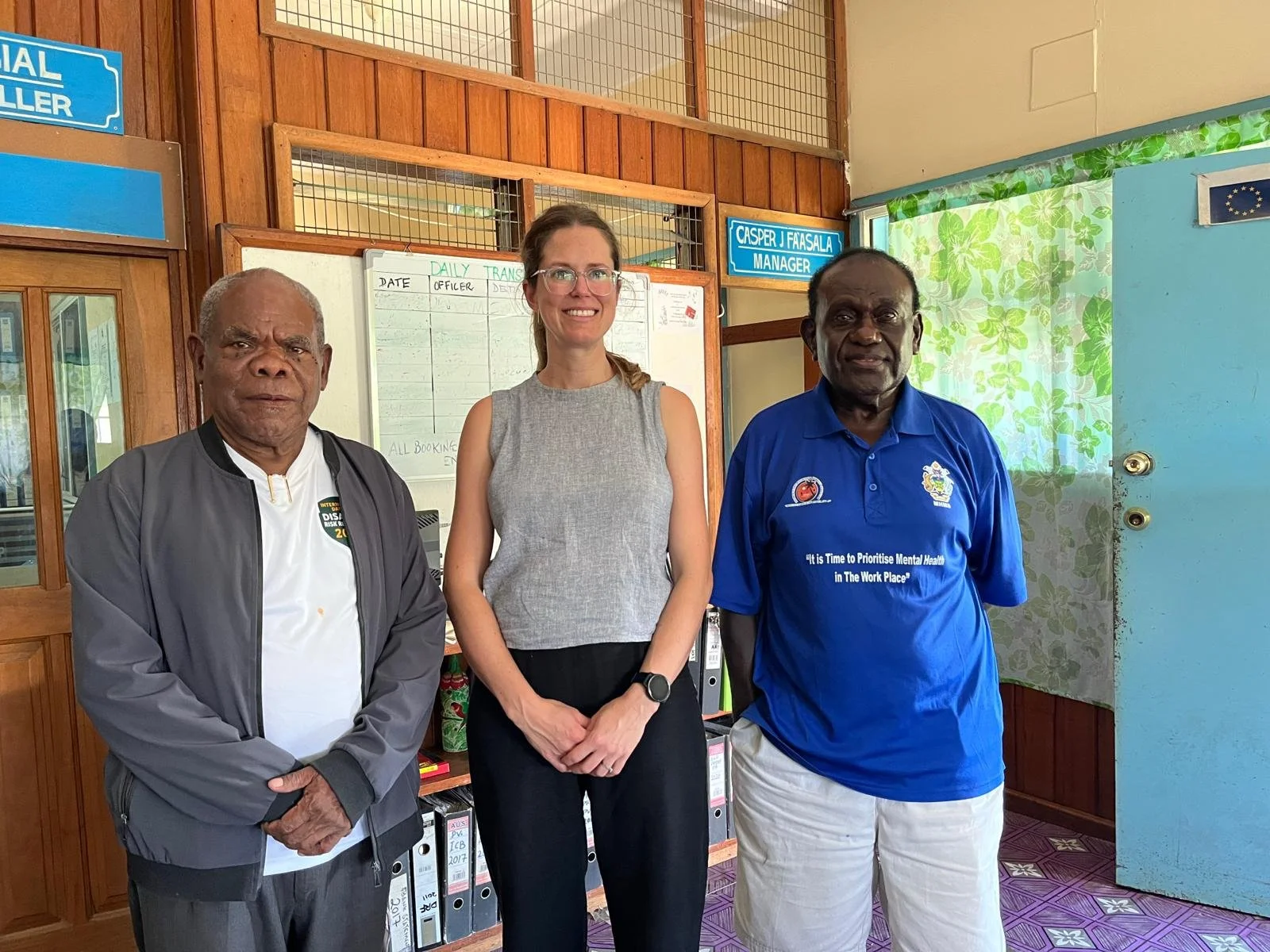
NDFSI CEO Casper Faásala (left) and William Same of SIPDA (right) with FEiA GEDSI Advisor Rachel Mather after signing a partnership Terms of Reference
It was with this in mind that we partnered with the Ministry of Health and Medical Services and the National Disability Forum of the Solomon Islands (NDFSI) for the November 11-12 Gender equality, disability and social inclusion (GEDSI) in field epidemiology workshop. The workshop was funded by Australian Aid. During this workshop, participants explored what epidemiology means, particularly in the context of Solomon Islands. They learnt to delineate between broader epidemiology and field epidemiology, before deep diving into core aspects of field epidemiology training programs (FETPs). Next, participants explored their own experiences of GEDSI, whether these experiences were personal or related to their profession, or cut across both. This broad overview of both field epidemiology and GEDSI provided a launchpad from which to brainstorm how to mainstream GEDSI into FETPs.
With rich representation from across the health and disability sectors – including participants from the Solomon Islands Deaf Association (SIDA), Blind and Visual Impairment Association Solomon Islands (BVIPSI), the Disability Women’s Empowerment Association (DWEA), and the Solomon Islands Psychosocial Disability Association (SIPDA) – there was no shortage of ideas on how to make field epidemiology more responsive to disability. Suggestions ranged from how the practice of field epidemiology could better serve the needs of people with disabilities, including in activities related to infectious disease outbreak and response, as well as how field epidemiology training and associated roles could become an inclusive discipline that people with disabilities could actively pursue. We’ll share more on the outcomes of the workshop in a future blog post.
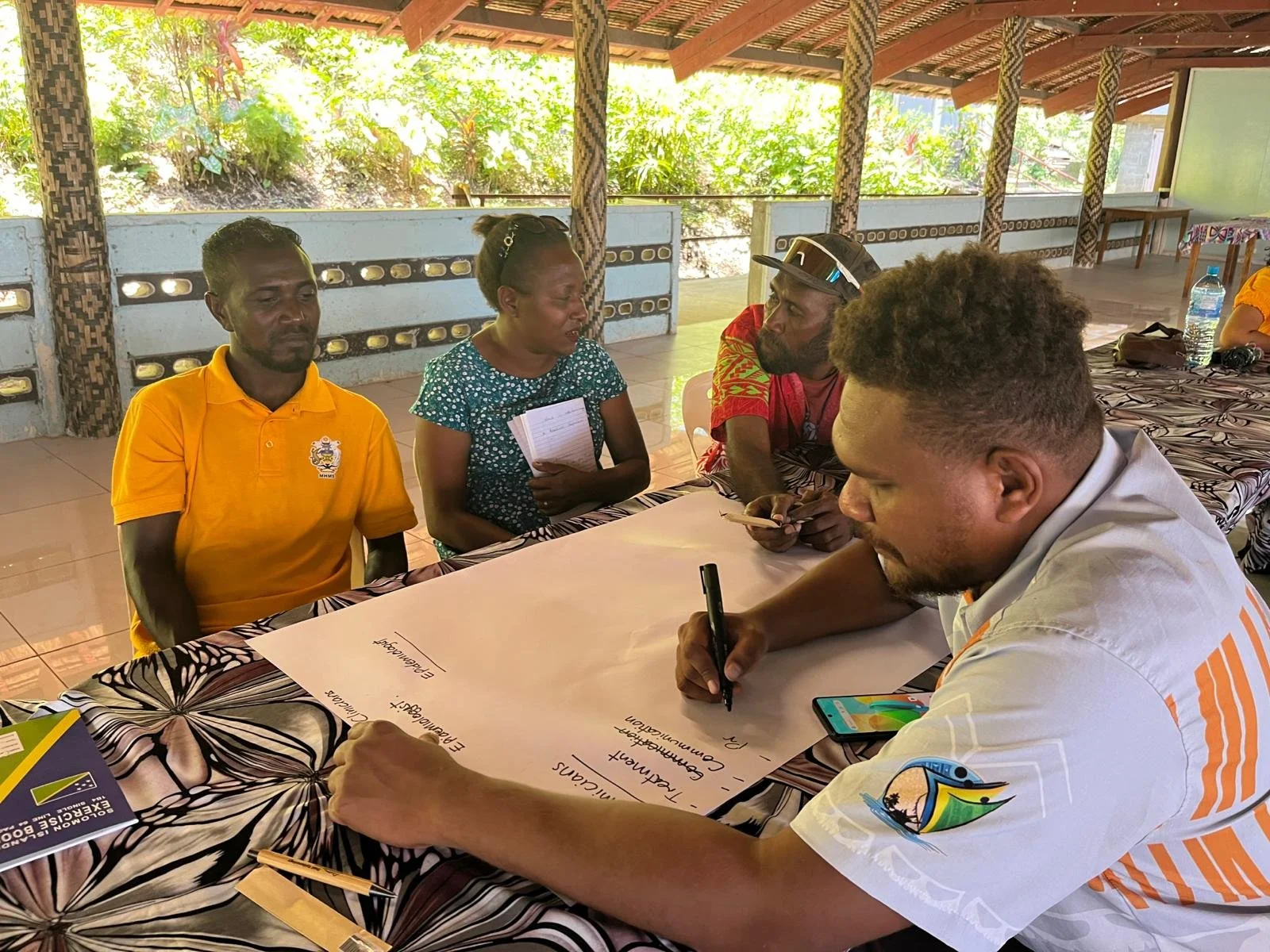
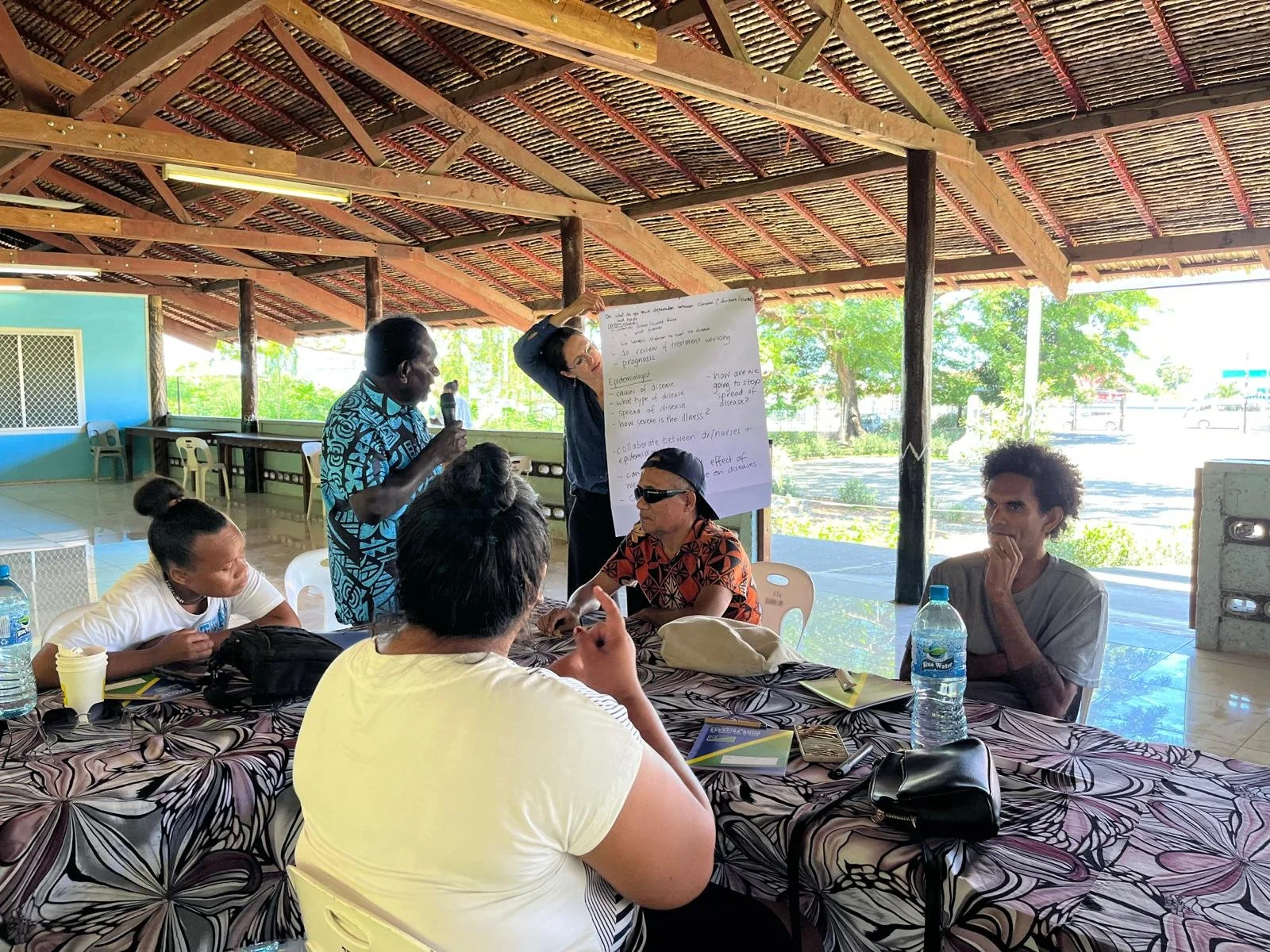
GEDSI workshop participants working together during a small-group activity.
Reflecting on how the workshop touched on the theme of the 2025 International Day of Persons with Disabilities, NDFSI CEO Casper Faásala spoke of his hopes for people with disabilities in Solomon Islands.
“Integrating the different programs we have to meet the needs of people with disabilities. Grow the abilities of people with disabilities so they can contribute to society in the ways they want. Mentors to facilitate the things they want to achieve”
“And we need parents who are proud of their children with disabilities, and believe in their abilities.”
For William Same, Office Manager of SIPDA, the way forward for mainstreaming disability in field epidemiology is as simple as fostering disability inclusive societies to advance social progress.
“Identify the strengths first so that we can grow from there”
This International Day of Persons with Disabilities, FEiA is energised by the voices of our partners in Solomon Islands, as we work together on an action plan. We must undergo similar processes in other partner countries, including Papua New Guinea and Vanuatu. And across each country, the easy part is listening. But in Solomon Islands, we welcome the challenges of the next steps: foster disability inclusive field epidemiology to advance social progress.
About FEiA
Based at the University of Newcastle and Hunter New England Health, FEiA partners with governments to establish and strengthen field epidemiology and Rapid Response Team training programs. We are supported by the Australian Government through the Australian Aid program, along with additional support from donors including Global Fund, Pandemic Fund, World Vision, World Health Organization, and the World Bank.
Our focus is on building resilient workforces that create lasting change, including through:
Frontline (One Health) Field Epidemiology Training Programs
Intermediate Field Epidemiology Training Programs
Extended Field Epidemiology Training Program
Rapid Response Team Training
Our team of experts is focused on developing high impact training programs that are co-designed and fully contextualised to meet the specific needs of country partners. We use adult learning theory to drive interactive and innovative training, aiming for transformational change. Our programs recognise the existing expertise of adult learners, and support higher learning through workshops, mentoring, and applied field projects to build practical skills in disease surveillance, outbreak detection, response, and prevention.
Additionally, we offer online eLearning courses and other resources, freely available to the global field epidemiology community. Available here.
About Field Epi in Action