2025 Highlights
Written by Patrick Tappouras - 18 Dec 2025
2025 has been a year of growth, collaboration, and tangible impact for the Field Epidemiology in Action (FEiA) program. This was recognised with FEiA receiving the University of Newcastle’s Global Engagement Award, acknowledging the strength of our partnerships and our contribution to global engagement across the Pacific. Throughout the year, our teams have strengthened training systems, embedded inclusion, built evaluation capacity, and delivered programs that empower local health workforces.
To mark the year, we asked each of our team leads to share their key highlights from 2025, moments that best reflect FEiA’s collective progress and the partnerships driving our work forward.
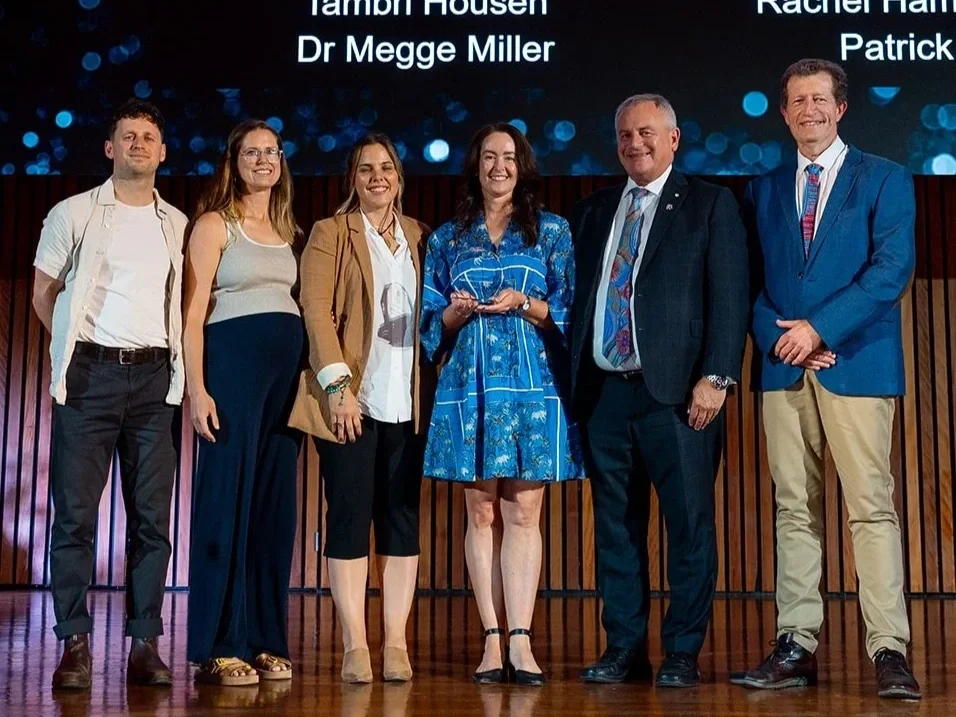
Part of the FEiA team with the University Vice-Chancellor at the University of Newcastle Staff Excellence Awards.
Gender Equality, Diversity and Social Inclusion Lead, Ms Rachel Mather
We developed a gender equality, disability equity and rights and social inclusion (GEDSI) analysis of the training programs we support in Solomon Islands, Papua New Guinea (PNG) and Vanuatu, which in turn informed the GEDSI Strategy and Action Plan.
We ran GEDSI sensitisation sessions with the FEiA team as well as the Sols FETP and FETPNG faculty, on the principles of GEDSI and key concepts like the twin-track approach and mainstreaming.
We formalised a partnership with the National Disability Forum of Solomon Islands (NDFSI) through a Terms of Reference.
We ran a two-day Workshop with NDFSI, other GEDSI stakeholders and representatives from the Solomon Islands health system on how to mainstream GEDSI priorities within FETPs.
We developed tools for a gender analysis of FETPs and engaged the field epidemiology community from countries including Pakistan, Malaysia, Taiwan and the Philippines to provide input and feedback on the tools through a workshop at the 2nd SAFETYNET Scientific Conference.
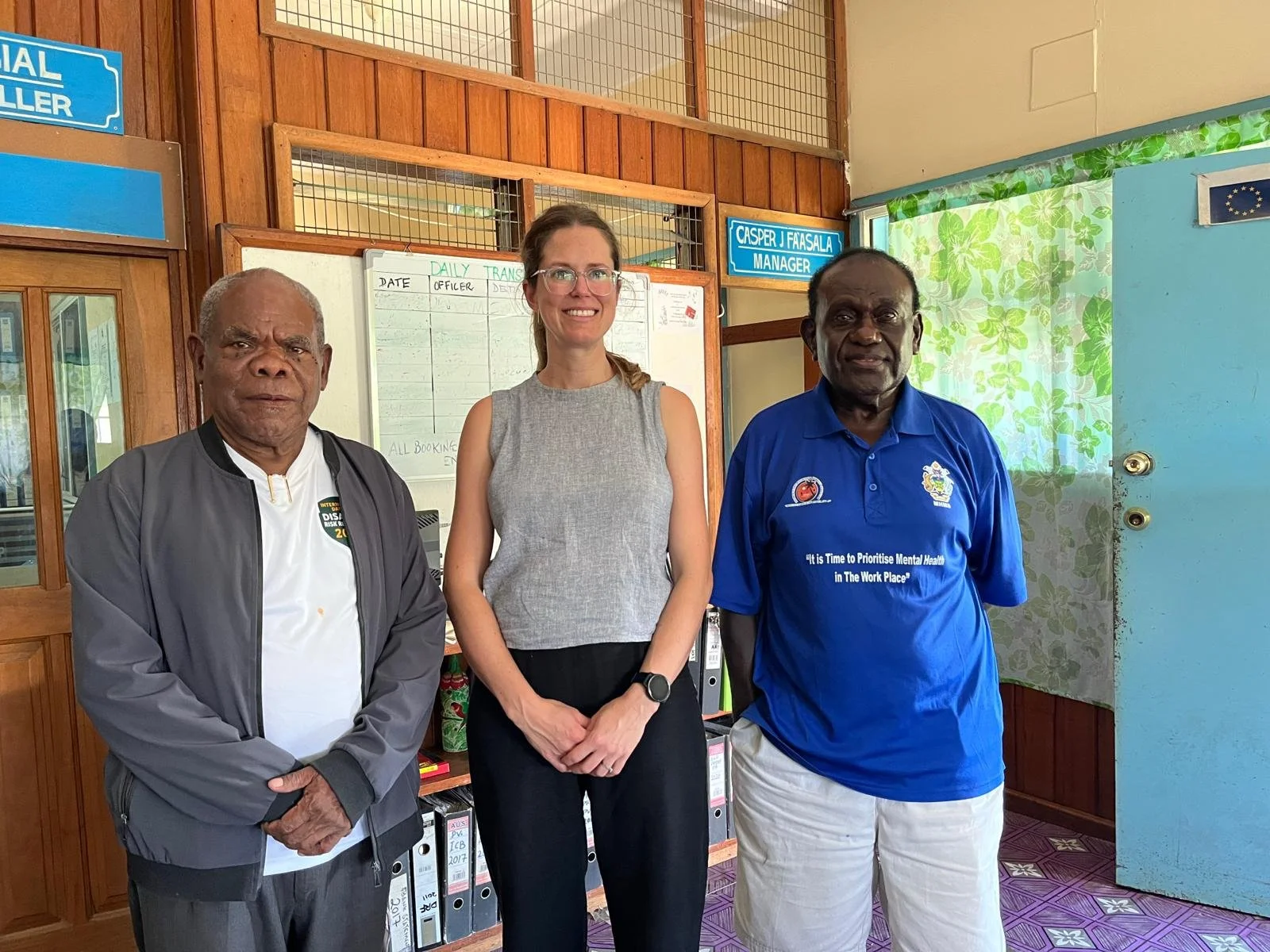
NDFSI CEO Casper Faásala (left) and William Same of SIPDA (right) with FEiA GEDSI Advisor Rachel Mather after signing a partnership Terms of Reference
Pacific Islands Program Lead, Dr Megge Miller
Cohort 3 of Solomon Islands Field Epidemiology Training Program have almost completed their training. Nine fellows from across the health system have been undertaking projects related to syndromic surveillance, malaria surveillance, skin abscesses, sharps management and the use of Excel amongst field epidemiology training program fellows and graduates. Five of the fellows are working on similar syndromic surveillance projects. This is the first time Sols FETP has run a group mentored intervention across multiple sites. The results will feed directly into improvements in surveillance in Solomon Islands.
A Reference Guide for Field Epidemiologists has been published as an open-source e-book, enabling access for field epidemiologists around the world. The Reference Guide explains key terms and uses worked examples of key concepts in field epidemiology.
We recruited epidemiologists to support Vanuatu to establish their intermediate field FETP. There have been ongoing engagements with the Ministry of Health in preparation for starting the first cohort of field epidemiology training in 2026. Outcomes from the discussions included fellow selection criteria, draft terms of reference for the Steering Committee, faculty selection and the contextualisation of the curriculum. We are in the process of finalising course documentation in preparation for CIFAL accreditation.
We commenced engagements with the Fiji Centres for Disease Control about the establishment of their own national-led intermediate-evel FETP. We aim to start the first cohort of training health care workers in Fiji in 2026.
We supported faculty development in Solomon Islands, including online sessions on questionnaire design and also supportedtheir ongoing development of skills in Excel. The sessions on questionnaire design also included a participant from NDFSI, as part of the program’s commitment to mainstreaming GEDSI.
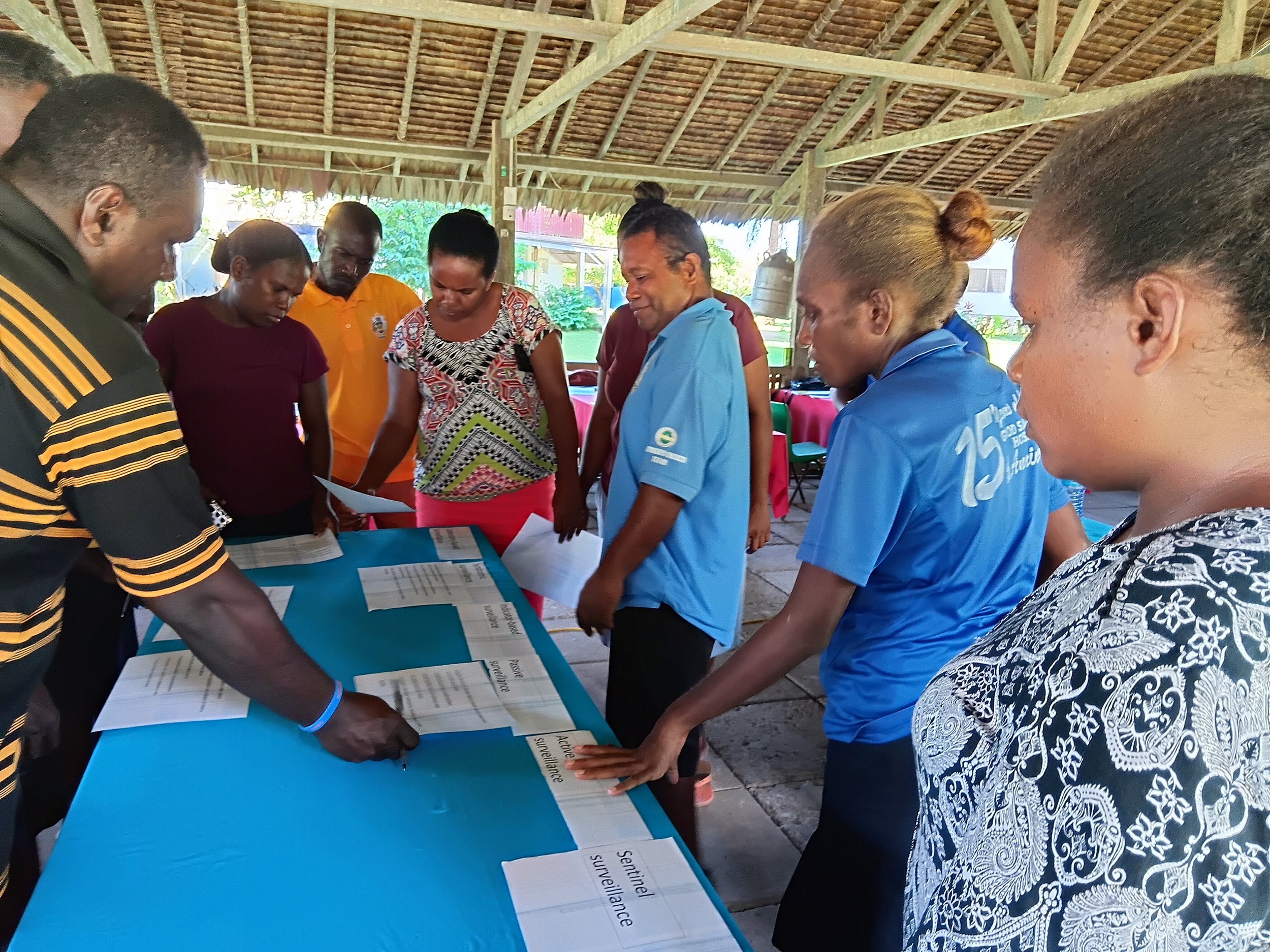
Participants of the 3rd cohort of Sols FETP
PNG Programs Lead, Assoc Prof Tambri Housen
The FETPNG team has made significant progress on institutionalisation and sustainability with:
a. The One Health frontline FETP (OH f-FETPNG) and intermediate FETP (iFETPNG) both received national accreditation by the Department of Higher Education and Research as a Certificate IV and a Diploma, respectively.
b. East Sepik Province was the first province to co-fund the OH f-FETPNG, welcoming an additional nine disease detectives from across human, animal, conservation, and environment sectors.
c. The iFETPNG program welcomed 11 new disease detectives, with several provinces also providing financial support for their iFETPNG fellows to undergo the training program.
d. 23 faculty from across sectors participated in a mentor’s workshop building on their technical, mentoring and facilitation skills.
The national RRT training program incorporated research findings into the Phase 3 curriculum, embedding systems strengthening into technical training. The new curriculum was piloted with the National RRT and will be rolled out in the provinces in 2026, supported by a new partnership with Australia’s National Critical Care and Trauma Response Centers’ PHOENIX program.
Two of our FETPNG colleagues, Ms Miriel Boas (OH f-FETPNG coordinator) and Ms Bethseba Peni (Provincial Disease Control Officer in West New Britain and FETPNG faculty member) received scholarships for transformational women in leadership training programs; COMPASS and Homeward Bound. We are excited to partner with the COMPASS program in 2026 to see more phenomenal women leaders in PNG undergo this transformational leadership development.
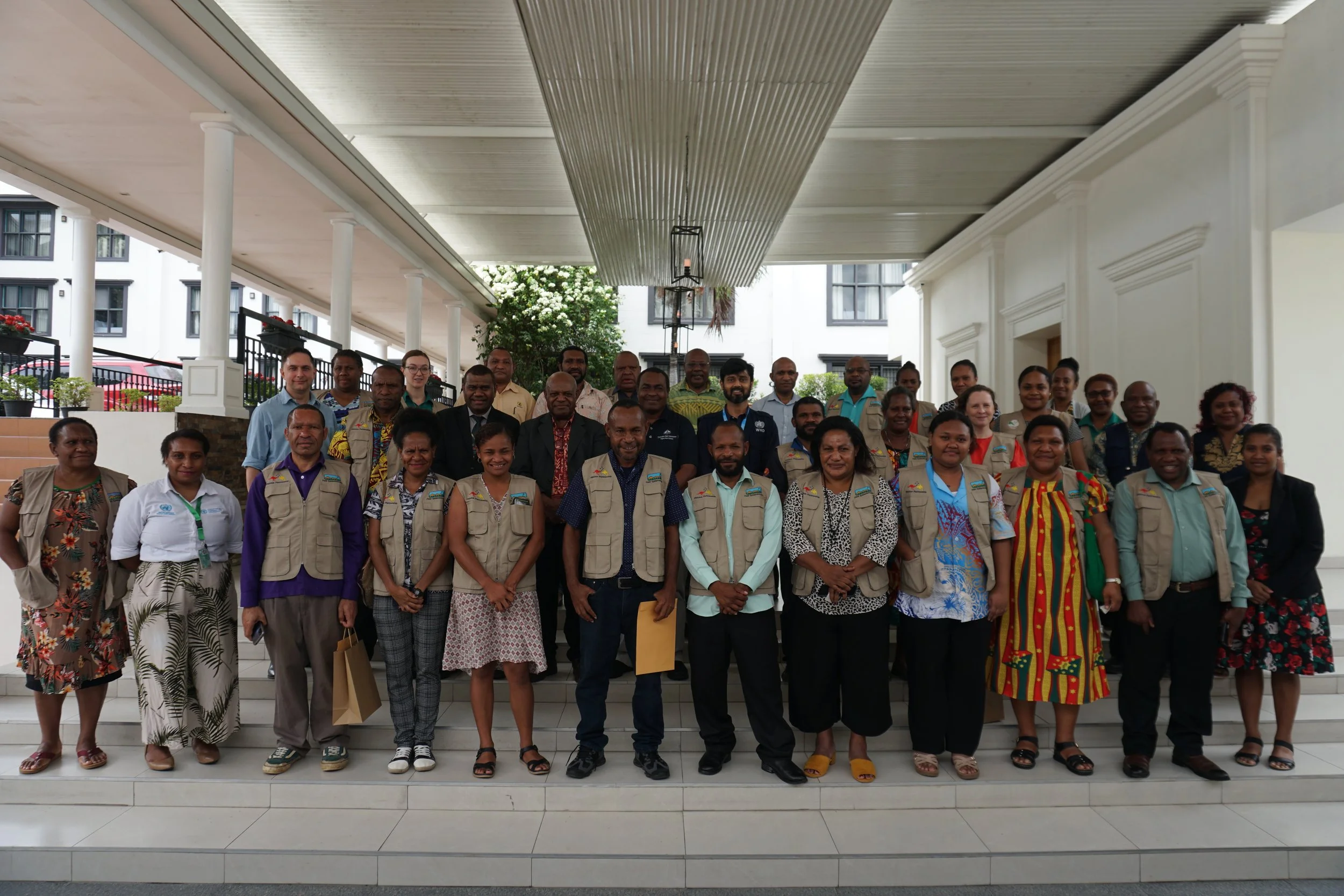
Fellows, faculty and invited guests at the Intermediate FETPNG graduation
Program Coordinator, Mr James Flint
We published an FETP impact framework for use by the global FETP community. Despite FETPs dating back almost 75 years, there has never been a consistent approach to evaluating their impact – until now!
We are completing impact evaluations of the Frontline, Intermediate and Advanced programs in PNG and Canada, and shared a lot of our learning:
We were invited to join the Global Field Epidemiology Partnership impact evaluation technical advisory group
We ran an impact evaluation workshop with the United States Center for Disease Control and Prevention (CDC) at the 2nd SAFETYNET Scientific Conference, sharing the impact evaluation framework we have developed and results from the evaluations we ran in PNG and Canada, while the CDC shared how they adapted our framework to evaluate the FETPs they support
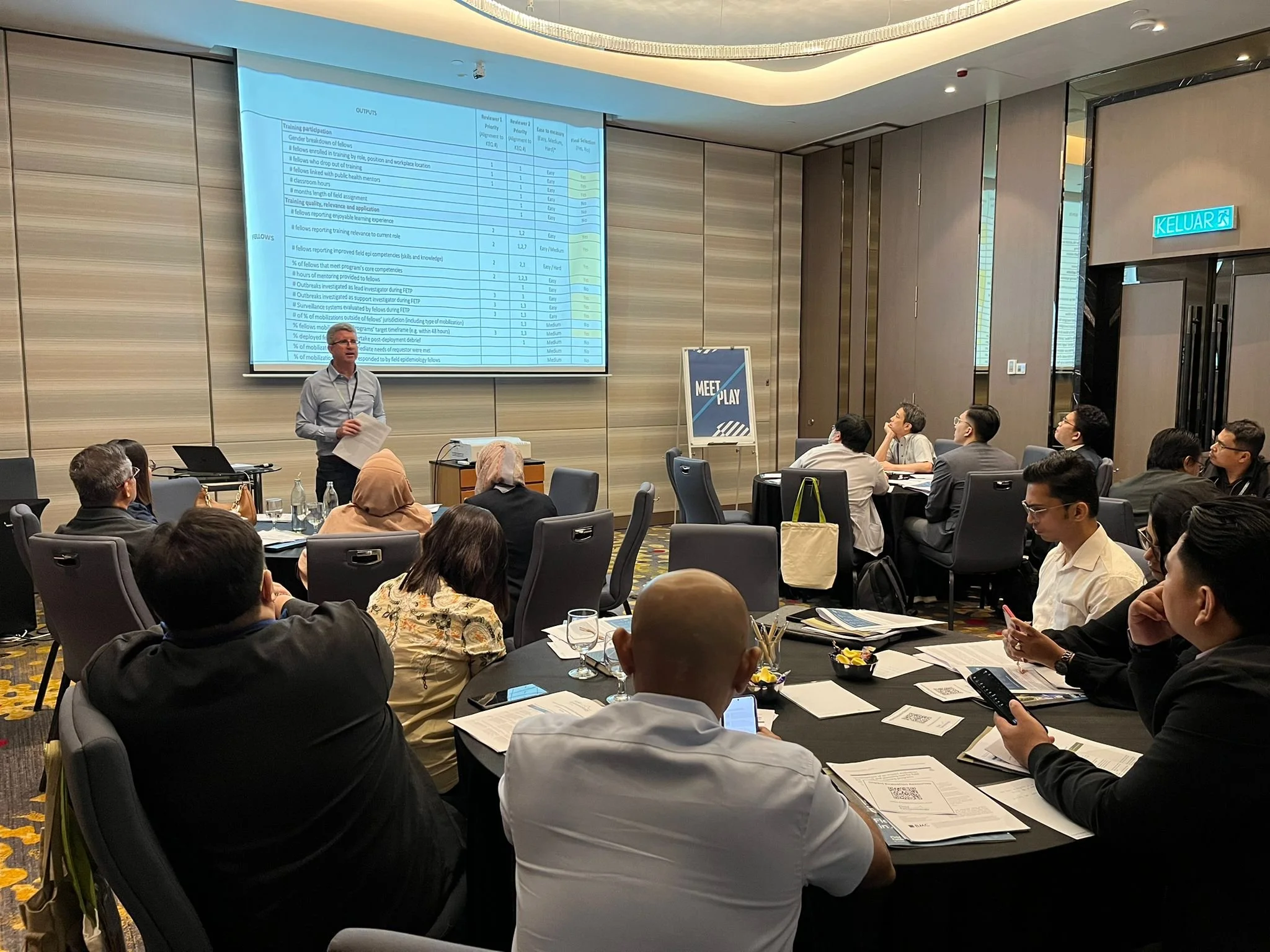
FEiA Program Coordinator, James Flint, delivering an impact evaluation workshop at the 2nd SAFETYNET Conference in Kuala Lumpur
About FEiA
Based at the University of Newcastle and Hunter New England Health, FEiA partners with governments to establish and strengthen field epidemiology and Rapid Response Team training programs. We are supported by the Australian Government through the Australian Aid program, along with additional support from donors including Global Fund, Pandemic Fund, World Vision, World Health Organization, and the World Bank.
Our focus is on building resilient workforces that create lasting change, including through:
Frontline (One Health) Field Epidemiology Training Programs
Intermediate Field Epidemiology Training Programs
Extended Field Epidemiology Training Program
Rapid Response Team Training
Our team of experts is focused on developing high impact training programs that are co-designed and fully contextualised to meet the specific needs of country partners. We use adult learning theory to drive interactive and innovative training, aiming for transformational change. Our programs recognise the existing expertise of adult learners, and support higher learning through workshops, mentoring, and applied field projects to build practical skills in disease surveillance, outbreak detection, response, and prevention.
Additionally, we offer online eLearning courses and other resources, freely available to the global field epidemiology community. Available here.
About Field Epi in Action