Balance the Scales: Wendy’s Journey in Field Epidemiology
Written by Patrick Tappouras - 5 Mar 2025
This International Women's Day, we wanted to share the story of Wendy Williams, a FEiA Project Manager and Epidemiologist from Vanuatu, and hear her thoughts on this year's UN Women Australia theme, Balance the Scales.
Wendy has worked across the Pacific in public health for over a decade, at the Vanuatu Ministry of Health, with The Pacific Community (SPC), and now with FEiA. We think her story speaks to what this theme means in practice.
Tell us a bit about where you come from and what shaped you.
I grew up in a small community in Vanuatu where people looked out for one another, and where my mother raised me on her own. She showed me every day what courage and resilience look like. Life was simple, but full of lessons. Watching her juggle work, family, and community responsibilities taught me early on that strength doesn't always appear loud or dramatic; often, it looks like quiet persistence.
I never imagined a career in epidemiology or health systems because those fields felt distant and invisible to a young girl in my village, but I always knew I wanted to help people and make life a little better for families like mine. That desire became my compass, and it led me from my first role in the Ministry of Health to regional work with SPC, and later to opportunities with the Burnet Institute and the University of Newcastle's Field Epidemiology in Action program. It carried me through years of study in Fiji and Australia, often while balancing motherhood, full-time work, and many late-night assignments.
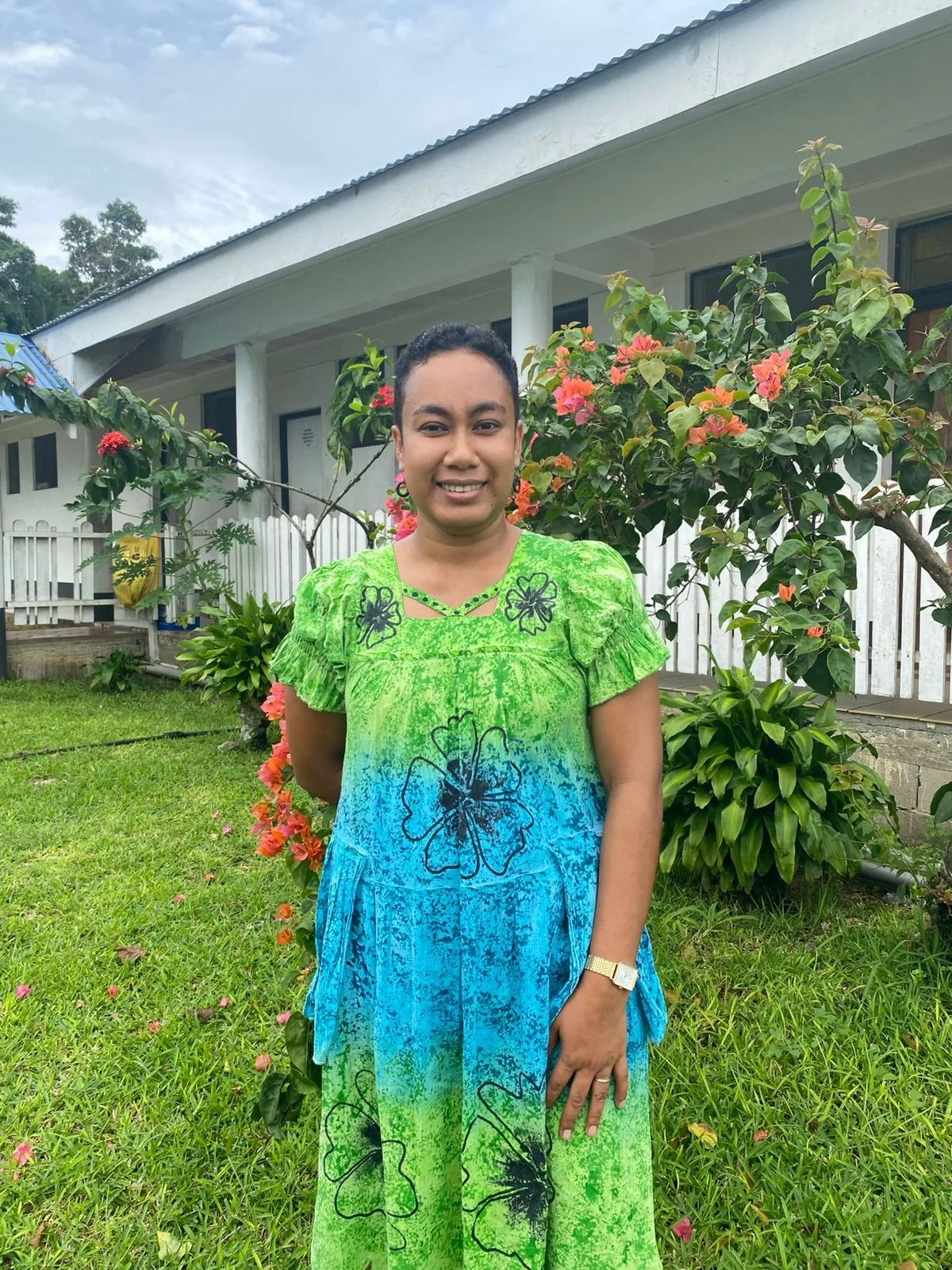
Wendy Williams
My journey has not been linear or easy, but it has been shaped by purpose, by the women who came before me, and by a deep love for the people and place that raised me. And now, my passion lies in opening doors that were once closed or invisible to girls growing up in communities just like mine.
Growing up in Vanuatu, what did opportunity look like for girls interested in health?
Growing up in Vanuatu, I was raised by a single mother whose resilience shaped my understanding of strength and possibility. Opportunities for girls interested in health were present, but they were not always easy to see, especially in technical areas like surveillance, epidemiology, or leadership. Most of the women I saw worked in frontline roles such as nursing or community health, which are essential but not often connected to higher-level decision-making. Even so, my mother's example taught me that determination and education can open doors, even when the path ahead is unclear.
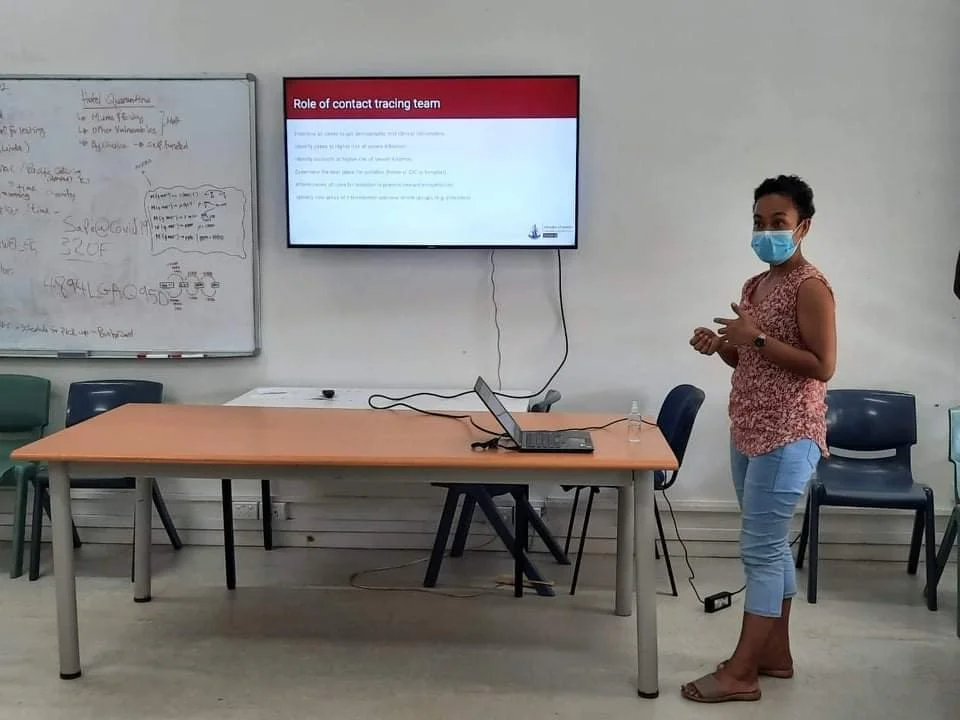
Wendy at the COVID‑19 Surveillance Operations Centre, providing an overview of the contact tracing team
What were the biggest barriers you faced, and what has helped?
One of the biggest barriers I faced was a lack of visibility. There were very few women in the technical health fields I wanted to enter, and access to specialised training was limited. Balancing cultural expectations, family responsibilities, and career development also created challenges. Today, as a mother of two, I continue to balance work, study, and motherhood. What makes this possible is support — from my partner, who shares responsibilities at home, and from colleagues, both women and men, who create a workplace environment where I can ask questions, share ideas, and grow. This support has helped turn many barriers into stepping stones.
Was there a turning point in your career?
The Australia Awards opened up opportunities that once felt out of reach. It provided access to advanced training, strong mentorship, and global networks that strengthened my technical and leadership skills. More importantly, it allowed me to bring those skills back to Vanuatu and apply them in ways that are practical and suited to the realities of life in the Pacific. It helped me understand that women from small island nations can contribute meaningfully to global health conversations and lead change at home.
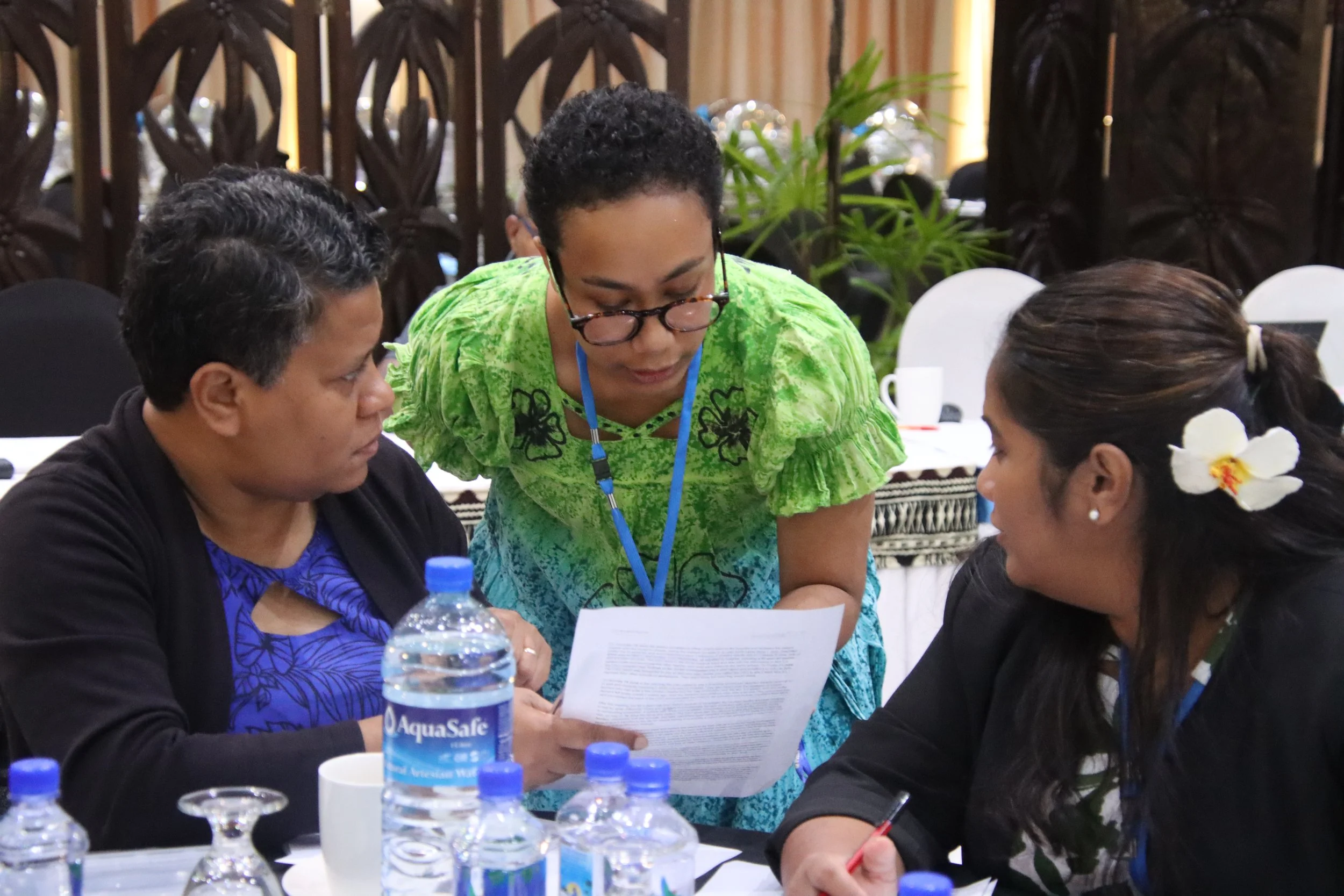
Wendy providing support in facilitating a regional workshop organised by SPC.
In your work now, where do you still see the scales unbalanced?
Women form the backbone of the health workforce in Vanuatu, yet access to specialist training, supervision, and leadership opportunities is still uneven. Women and girls also carry heavier caregiving responsibilities during health emergencies but are often under-represented in planning and decision-making spaces. Structural challenges such as transport and connectivity from outer islands can further limit access to services and decision-making.
In my current work, I focus on strengthening surveillance systems, building research capacity, and improving emergency preparedness across teams. A big part of what I do is helping health officers develop practical field epidemiology skills, including case detection, outbreak response, data analysis, and health-system improvement. Through FEiA, I contribute to hands-on training, curriculum development, and mentoring so health workers can apply what they learn in real situations. I also play a part in supporting initiatives that help build networks where Pacific health workers can learn from and support each other. I am encouraged that women are increasingly being recognised in leadership positions. This progress has not come easily, but it shows that with strong support at home, in workplaces, and across institutions, it is possible to shift the balance.
What would you say to a young woman in Vanuatu thinking about a similar path?
Your story is your strength, whether you come from a single-parent household, a rural community, or a small island. Do not wait to feel completely ready — start where you are. Ask questions, seek support, stay curious, keep learning, and trust your own voice. Build a network of people who believe in your potential. Balancing the scales is not something women must do alone; it requires supportive families, inclusive teams, and institutions that make space for your voice. Every step you take helps shift the balance for the next generation of Ni-Vanuatu girls.
About Field Epi in Action